
GPPS
General-purpose polystyrene offers high clarity, hardness and dimensional stability, but its impact strength is low.
- Transparent packaging
- Disposable products
- Electronic component boxes
POLYMER TYPES
Preferred in applications requiring rigidity and easy processing, polystyrene is produced in two main groups: GPPS and HIPS. Review the technical properties to choose the right PS type for your application.
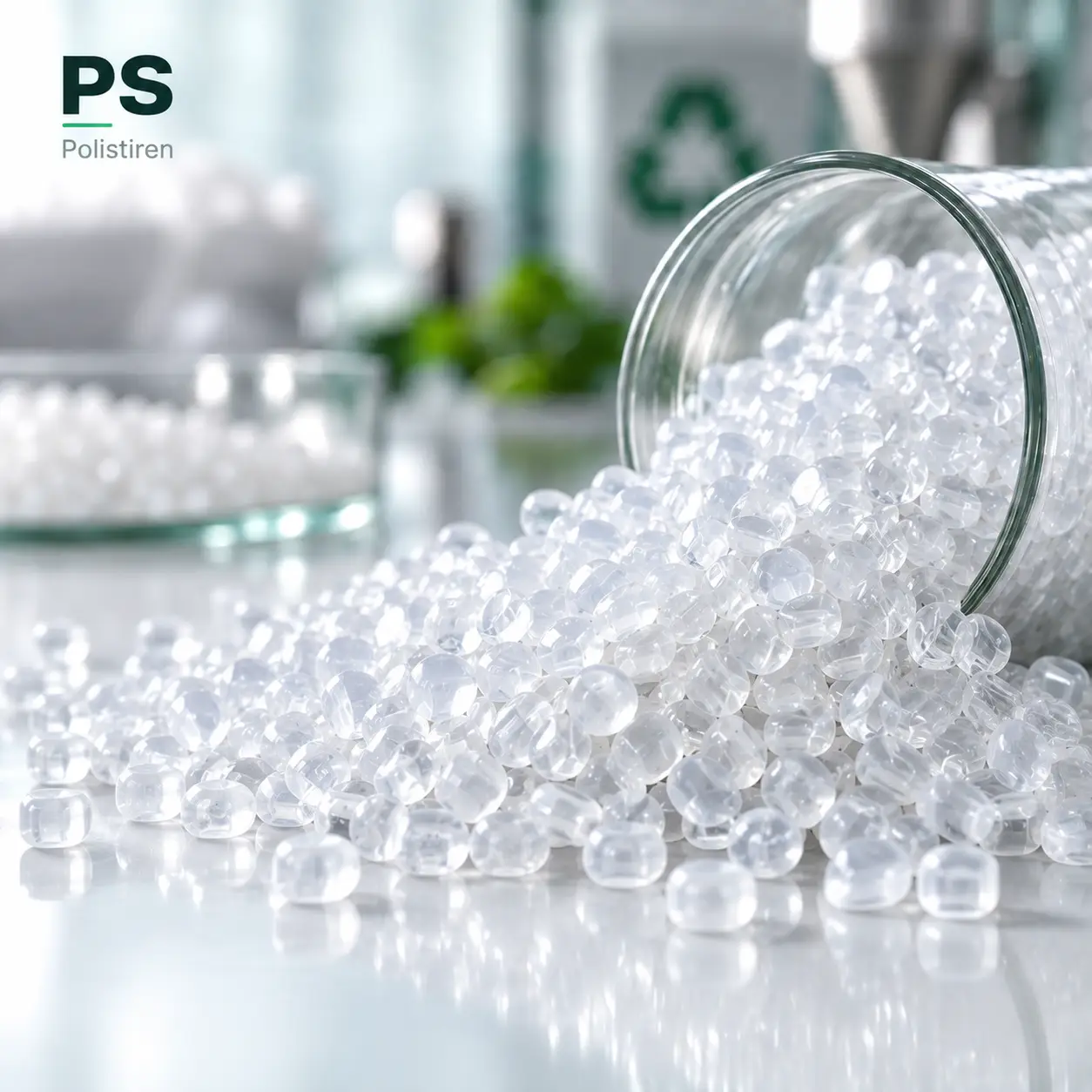
PS PRODUCT GROUPS
The difference between polystyrene types comes from rubber additive content, which determines the balance between clarity and impact strength.
General-purpose polystyrene offers high clarity, hardness and dimensional stability, but its impact strength is low.
Polystyrene with improved impact strength through rubber additive; it is opaque and more durable.
PS grades developed with special additives such as UV stabilization, flame retardancy or high flowability.
TECHNICAL PROPERTIES
PS type selection should be based on clarity needs, impact strength requirements and process conditions.
GPPS grades offer high light transmission, which is why they are preferred in visual packaging applications.
High hardness and dimensional stability are an advantage in parts that need precise dimensions.
Low melting temperature and flowability allow fast injection cycles.
Thanks to its low shrinkage rate, it is preferred in parts with precise tolerances.
APPLICATIONS
PS finds wide use in different sectors depending on the balance between clarity and durability.
When choosing the PS type for your application, consider clarity needs, impact strength requirements and production process together. Contact our team for suitable products and sourcing options.
FREQUENTLY ASKED QUESTIONS
GPPS has a clear and hard structure, while HIPS offers an opaque but more impact-resistant structure thanks to rubber modification.
GPPS in particular can be brittle under sudden, heavy loads because of its low impact strength; HIPS may be preferred in these cases.
PS products with suitable grade and regulatory approval can be used in food packaging; check the compliance certificate before selecting.
Yes. GPPS and HIPS prices can differ by additive content, producer and market conditions.
PS SOURCING SOLUTIONS
Share your application, clarity and strength requirements; we’ll review suitable sourcing options for your GPPS or HIPS requirement.
Request a Quick Quote →