
PP Copolymer
It is one of the most widely used polymers in automotive because of its high impact strength at low temperatures.
- Bumper and exterior trim parts
- Interior trim panels
- Engine compartment parts
SECTORS · 05
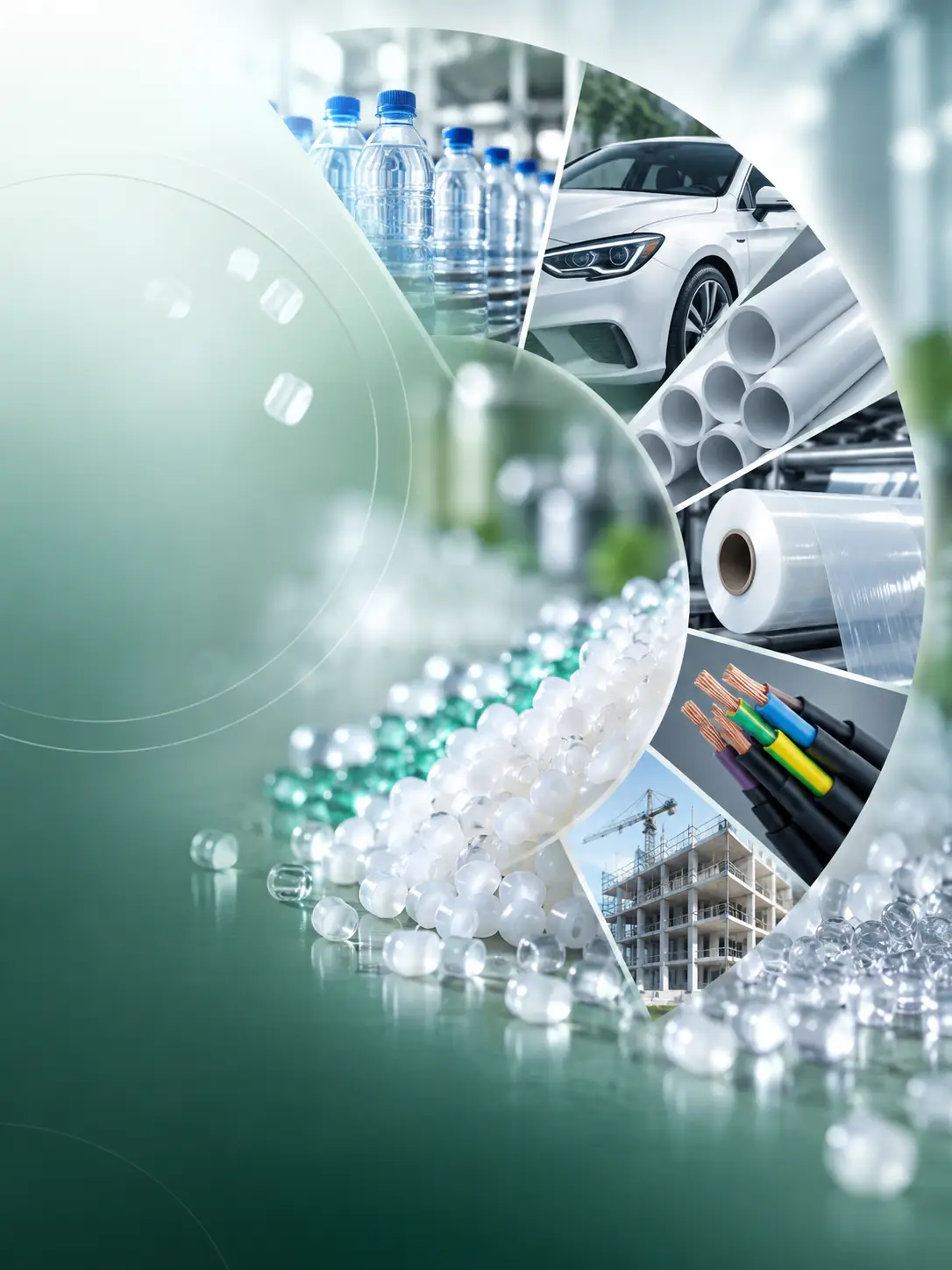
In automotive parts such as bumpers, interior trim, wiring harnesses and fuel tanks, different polymer groups are preferred depending on priorities of light weight, impact strength and heat resistance.
POLYMERS USED
In automotive applications, the part’s location, mechanical load and aesthetic requirements determine material selection.
It is one of the most widely used polymers in automotive because of its high impact strength at low temperatures.
Preferred in applications such as fuel and fluid reservoirs thanks to its chemical resistance and light weight.
Used in cable and gasket applications thanks to its flexibility and flame-retardant properties.
SELECTION CRITERIA
The right material should be chosen according to the part’s location, temperature exposure and aesthetic requirements.
Reducing vehicle weight is a critical design goal for fuel efficiency.
High impact strength is required, especially on exterior parts, even at low temperatures.
High temperature resistance is a priority for parts near the engine compartment.
On visible exterior parts, surface quality and paint adhesion are important criteria.
APPLICATION EXAMPLES
In the automotive sector, polymer parts have a wide range of uses in both interior and exterior components.
When choosing a polymer for automotive, we recommend evaluating the part’s location on the vehicle, the temperature it is exposed to and its mechanical load together with OEM specifications. Contact our team for suitable products and sourcing options.
FREQUENTLY ASKED QUESTIONS
PP copolymer is widely used in bumper production thanks to its high impact strength at low temperatures and light weight.
PE’s high resistance to fuel and chemicals makes it possible to produce durable and safe fuel reservoirs.
Many automotive manufacturers require approval that the material used complies with their own technical specifications.
Polymer type, additive package (UV, impact, flame retardant) and market conditions are the main factors that affect price.
SOURCING FOR AUTOMOTIVE
Share the part’s location, mechanical requirements and quantity; we’ll review suitable sourcing options for your PP, PE or flexible PVC requirement.
Request a Quick Quote →