
Homopolymer PP
Made solely from propylene monomer; offers high rigidity, hardness and melting point.
- Packaging boxes and caps
- Household goods
- Textiles (woven sacks, rope)
POLYMER TYPES
With its light weight, chemical resistance and wide processing range, polypropylene is produced in different classes: homopolymer, copolymer and random copolymer. Review the technical properties to choose the right PP type for your application.
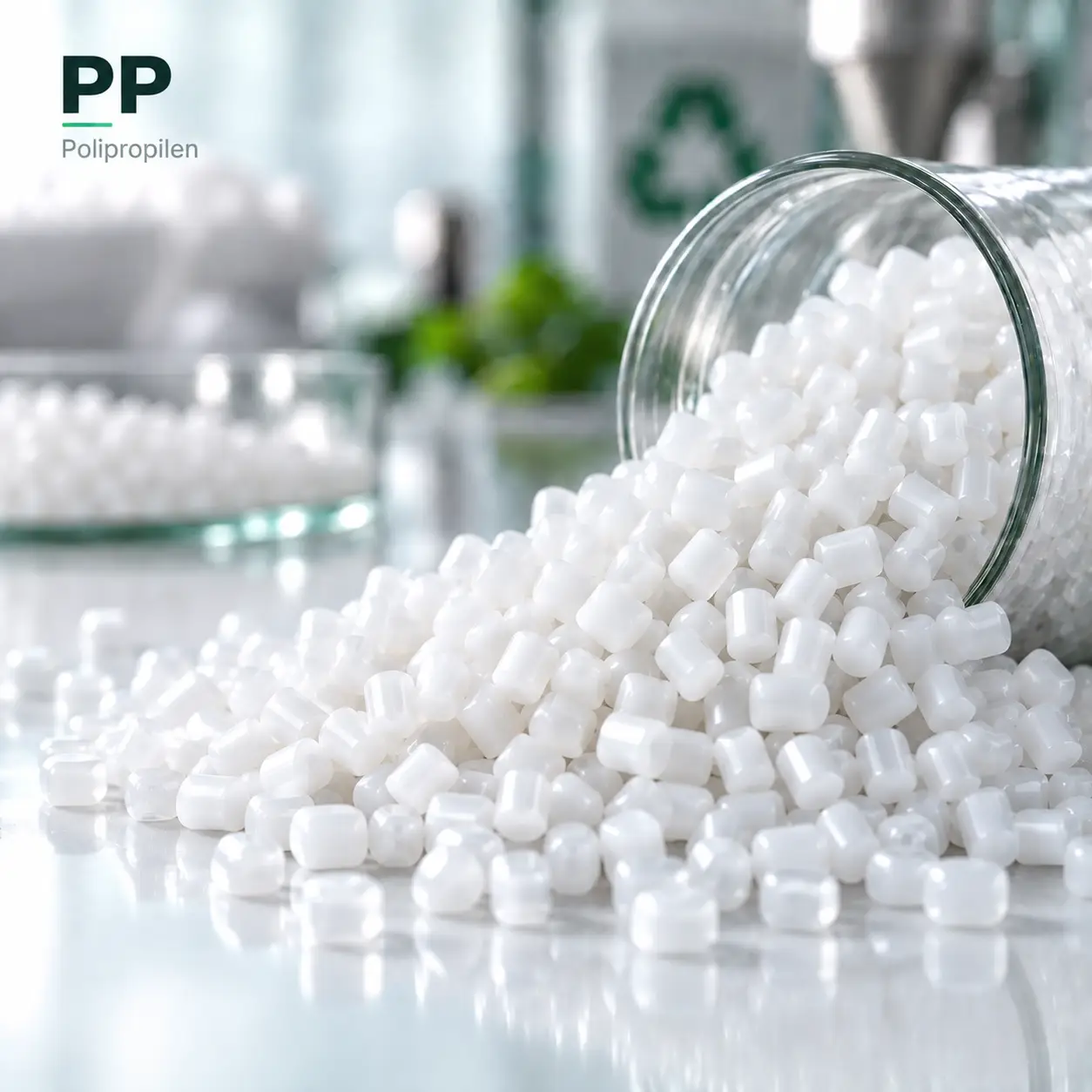
PP PRODUCT GROUPS
The difference between polypropylene types comes from the polymerization method and chain structure, which determine properties such as stiffness, impact strength and clarity.
Made solely from propylene monomer; offers high rigidity, hardness and melting point.
Obtained by combining ethylene and propylene in a block structure; impact strength at low temperature is improved.
A structure in which ethylene is randomly distributed in the propylene chain; provides higher clarity and flexibility.
TECHNICAL PROPERTIES
PP type selection should be based on mechanical strength, temperature resistance, clarity needs and process conditions.
Its low density offers advantages in part weight and transport cost.
Withstands higher temperatures than other polyolefins.
Offers high resistance to acids, bases and many organic solvents.
Resistant to repeated bending and stress; preferred in living-hinge applications.
APPLICATIONS
PP is preferred across many industries thanks to its balanced mechanical properties and cost efficiency.
When choosing the PP type for your application, consider temperature conditions, impact strength requirements, clarity needs and production process together. Contact our team for suitable products and sourcing options.
FREQUENTLY ASKED QUESTIONS
Homopolymer is more rigid and hard; copolymer, thanks to its ethylene content, offers better impact strength, especially at low temperatures.
Random distribution of ethylene in the chain reduces crystalline structure and increases light transmission.
Service temperature varies by grade; for applications requiring continuous high temperature, review the technical data sheet.
Yes. Homopolymer, copolymer and random PP prices can differ by grade, producer and market conditions.
PP SOURCING SOLUTIONS
Share your application, mechanical requirements and quantity; we’ll review suitable sourcing options for your homopolymer, copolymer or random PP requirement.
Request a Quick Quote →